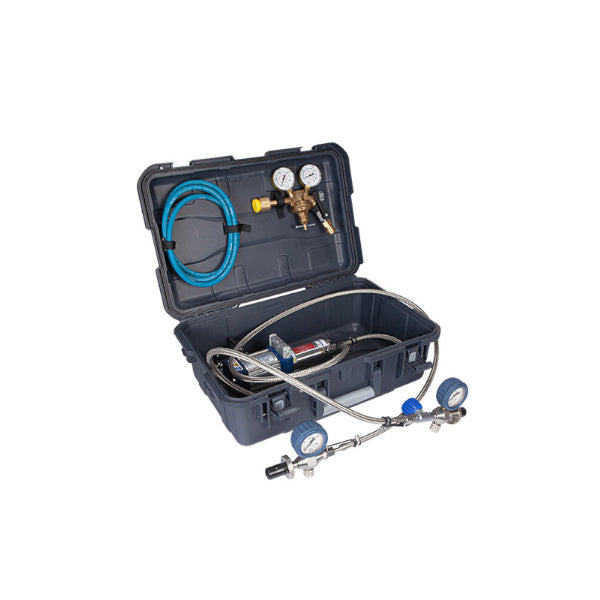
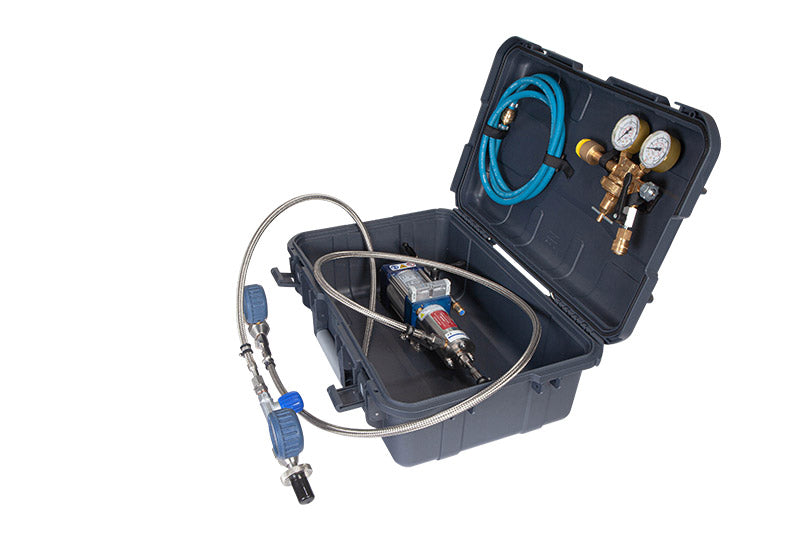
If you run a dive center or liveaboard and you are researching gas boosters, you have probably come across the term "drive air" or "control air" in a product spec. It sounds technical, but the idea is straightforward.
This article explains what drive air is, how it works, and why it matters for your gas system.
What is a Gas Booster?
A gas booster lets you transfer gas from a lower-pressure supply cylinder into a higher-pressure receiving cylinder. In other words, it lets you recover and use gas that would otherwise go to waste.
Take a common scenario: you have a 50-liter helium storage cylinder sitting at 30 bar after a busy day. Without a booster, that remaining helium is too low-pressure to be useful. With a booster, you can move it directly into a Trimix cylinder from a previous dive and continue building the mix to your target pressure.
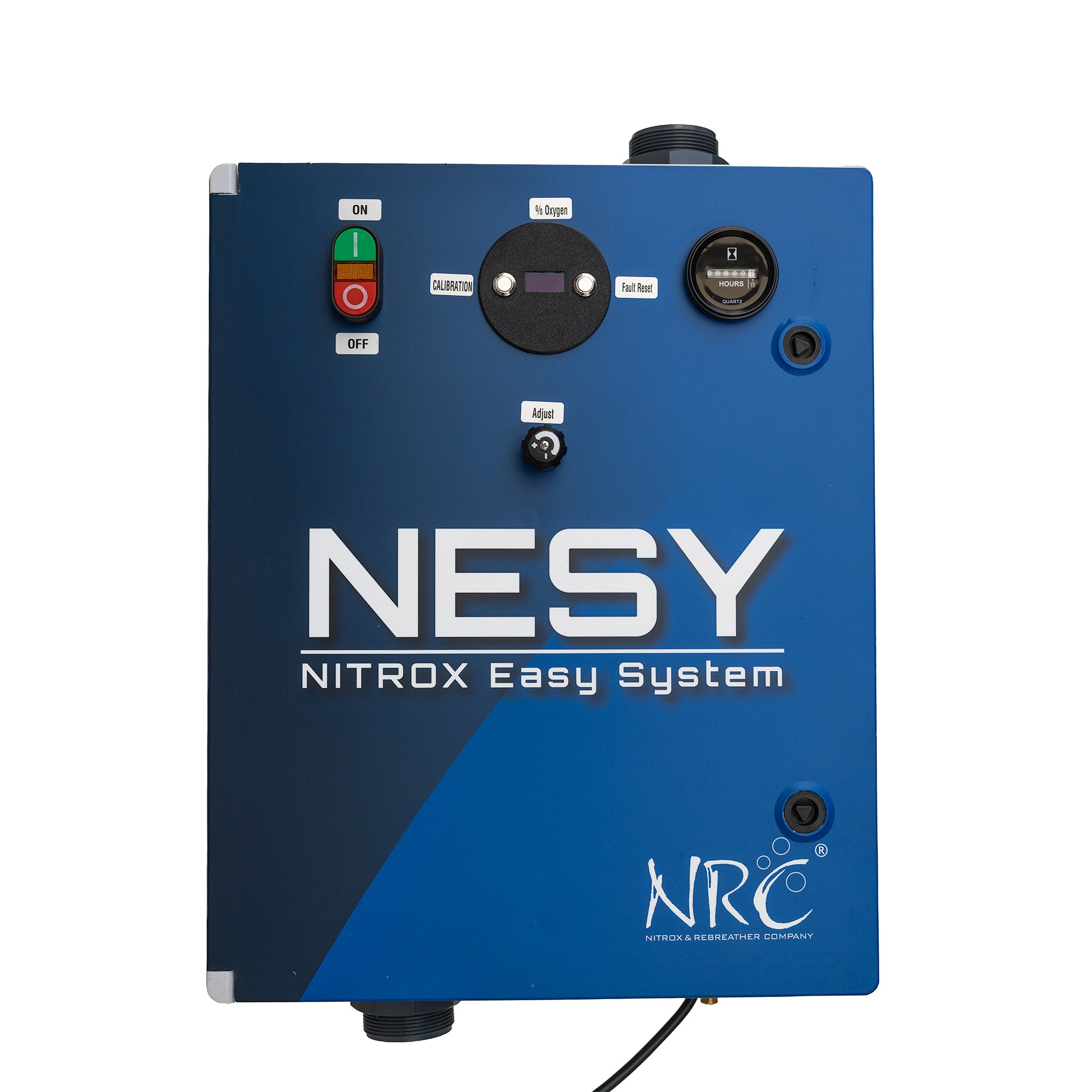
Dive centers and liveaboards use them to top off cylinders, support Nitrox blending operations, and handle gases such as oxygen.
What is Drive Air?
Drive air is the compressed air that powers the booster. It is sometimes called control air or drive medium, and they mean the same thing.
The booster uses incoming air pressure to drive an internal piston mechanism that does the compression work. No electricity is needed at the booster itself, and the drive air and the gas being compressed are kept in completely separate internal chambers.
How Does Drive Air Power the Booster?
Drive air pushes against a large piston, which drives a smaller high-pressure piston on the gas side. Because the drive piston is much larger, even moderate air pressure generates very high output pressure. A small internal valve reverses the drive air direction automatically at each stroke, creating the continuous transfer that fills your cylinder.
The drive air itself can come from three sources:
-
A low-pressure workshop compressor with a water separator
-
A pressure reducer connected to a diving cylinder, adjustable from 0 to 10 bar
-
The first stage of a diving regulator via a BCD inflater hose and adapter
This makes the booster useful well beyond a fixed gas station, including remote fills where a full compressor setup is not available.
NRC Tec Boosters: Three Models for Different Operations

NRC International manufactures three Tec Booster models, each suited to different fill volumes and applications.
The 220-1
This is a single-stage booster suited to dive centers with moderate daily Nitrox blending where fill speed is less of a priority. It is compact and well-matched to operations running a modest number of fills per day.
The 220-2
This booster uses two high-pressure pistons, making it significantly faster for the same fill. It suits higher-throughput operations where turnaround time matters, including busier Nitrox stations and oxygen blending setups.
The 300-2
This is the highest-capacity model in the range, built for helium recovery, high-pressure top-off applications, and stations where fill speed directly affects daily workflow.
All three models run on filtered, oil-free compressed air and share the same pneumatic drive principle.
Need Help Choosing?
If you are planning a new gas station or upgrading an existing setup, choosing the right booster from the start saves time and avoids performance issues that are hard to fix once the system is running.
Founded in 2000, NRC International has supplied German-engineered gas systems to dive operations in more than 35 countries. Our range covers Nitrox systems, TEC boosters, and air compressors built to work together.
Browse our TEC booster range to compare models, or contact us for guidance on the right configuration for your operation!