How much gas does your operation actually move in a typical day?
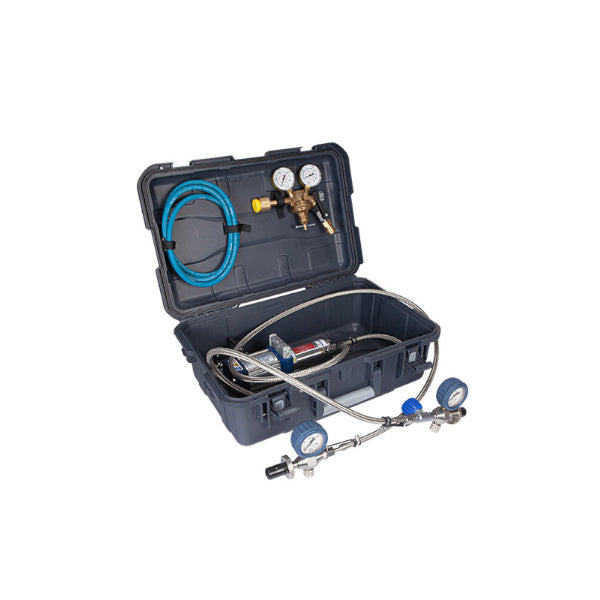
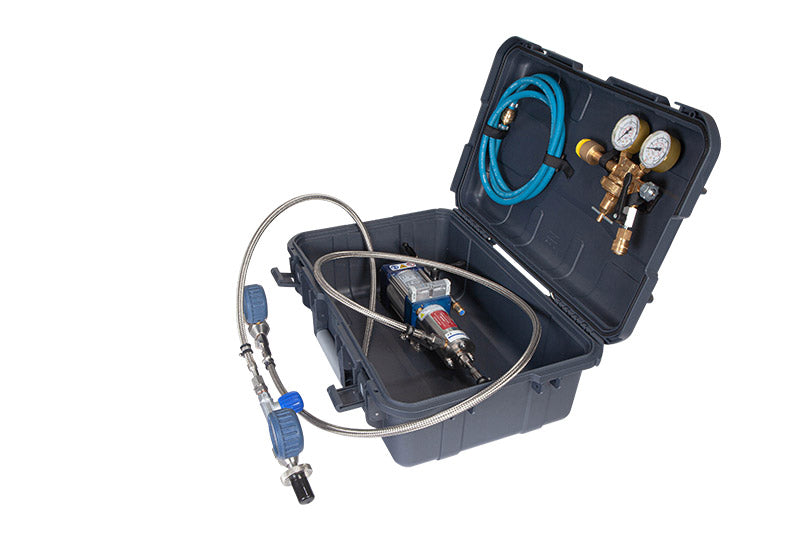
NRC developed three TEC Booster configurations to support different operational stages. The 220-1, 220-2, and 300-2 share the same engineering foundation, but they are built for very different workloads.
Choosing the right model should be about aligning displacement and efficiency with the way your dive center or liveaboard operates today, and where it is heading next.
What Differentiates the NRC TEC Booster Models?
The main performance variable is displacement volume, meaning how much gas moves per cycle, as can be seen in the following table:
|
Specification |
|||
|
Displacement Volume |
13 cm3 |
26 cm3 |
100 cm3 |
|
Weight |
4 kg |
5.5 kg |
22 kg |
|
Primary Application |
Small rebreather cylinders |
Doubles/bailout cylinders |
Storage banks/ commercial dive centers |
|
Pressure Configuration |
232 / 300 bar |
330 bar safety valve |
330 bar safety valve |
|
Piston Design |
Single piston |
Double piston |
Double piston |
Displacement largely determines throughput, as a larger displacement moves more gas per stroke. This typically results in faster filling and improved recovery capacity when other operating conditions are comparable.
For this reason, booster selection should be based on real operational volume rather than maximum pressure rating alone.
How Filling Times Differ Across NRC TEC Booster Models

Filling time is influenced by displacement volume and supply pressure. The comparison below reflects NRC Tec Boosters filling a 10-liter cylinder from 150 to 200 bar at a constant 8 bar drive pressure, without accounting for temperature effects. As withdrawal pressure decreases, the performance gap between models becomes more pronounced.
At a withdrawal pressure of 150 bar:
-
The 220-1 requires 4 minutes and 20 seconds
-
The 220-2 requires 1 minute and 22 seconds
-
The 300-2 requires 50 seconds
At a withdrawal pressure of 50 bar:
-
The 220-1 requires 12 minutes and 50 seconds
-
The 220-2 requires 6 minutes and 37 seconds
-
The 300-2 requires 3 minutes
As supply pressure decreases, all models require longer filling times; however, higher displacement units experience a smaller relative increase and therefore retain a clearer time advantage, an important consideration for high-volume technical blending operations.
When Should You Upgrade Your Gas Booster?
Operational growth does not always happen overnight. It often shows up in subtle friction across your workflow. Longer fill times, increased inefficiency or greater residual gas in supply cylinders, or increased blending volume can indicate that your current booster is operating at its limits.
You may need to upgrade if you notice:
-
Increasing fill times during peak hours
-
Difficulty reaching the full 300 bar without wasting supply gas
-
Higher daily demand for Nitrox or Trimix blends
When these patterns appear consistently, your operation may have outgrown a smaller booster configuration.
Which NRC TEC Booster Fits Your Operation?
As blending demand increases and helium recovery becomes more critical, booster performance directly impacts efficiency, gas value, and scalability. Selecting the right displacement ensures your system supports daily workload without creating bottlenecks.
With more than two decades of experience in high-pressure Nitrox and technical gas systems, NRC designs TEC Boosters engineered for professional dive centers and liveaboards worldwide. From precision low-volume workflows to continuous high-capacity recovery, each model is built to integrate seamlessly into your gas infrastructure.
Explore the NRC TEC Booster range and determine which configuration best supports your operation!
Frequently Asked Questions
How do I determine which NRC TEC Gas Booster is right for my operation?
The correct configuration depends on your daily cylinder volume, gas type, recovery requirements, and expected growth. Smaller displacement units suit precision or low-volume workflows, while higher displacement models support continuous blending and large-scale helium recovery. Matching throughput to real operational demand is the key factor.
Are NRC TEC Boosters suitable for high-pressure oxygen applications?
Yes. NRC TEC Boosters are engineered with oxygen-compatible materials and components tested for pure oxygen use. They are designed for safe high-pressure oxygen and Nitrox applications when operated according to manufacturer specifications.
How do I know if I need an upgrade?
If your filling times are becoming a bottleneck, or if you find yourself unable to reach your target 300 bar pressure without wasting gas in your supply banks, your operation has likely outgrown a smaller displacement booster configuration.