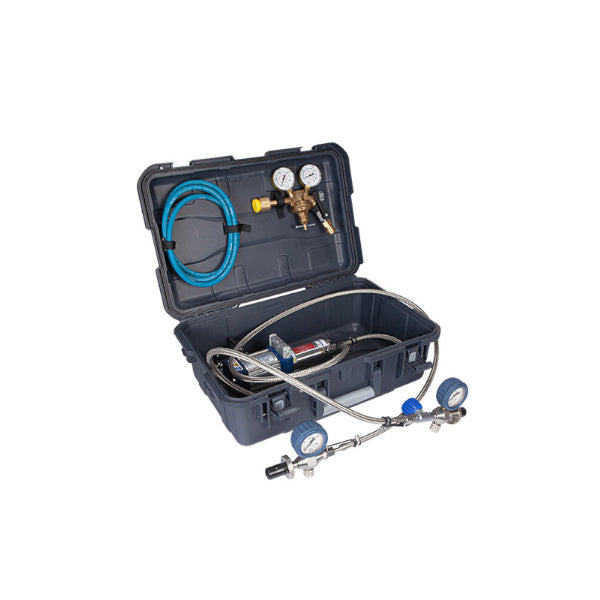
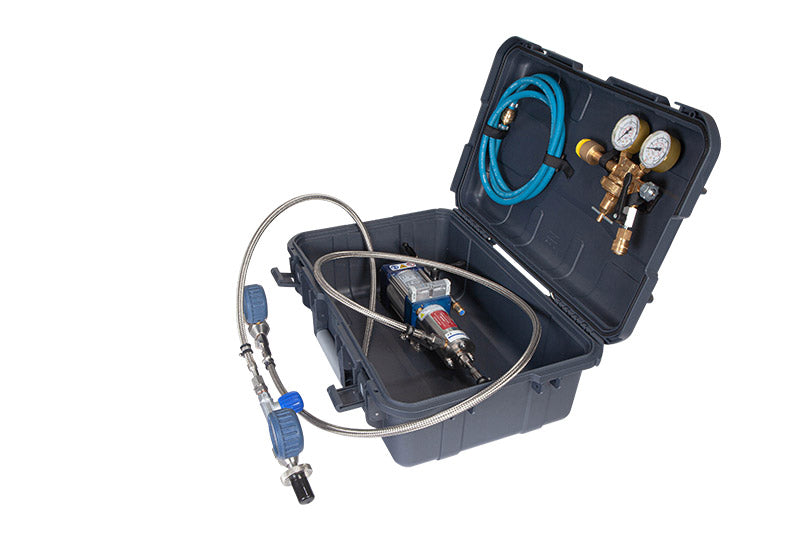
Booster pump maintenance is an important safety requirement. Working with high-pressure breathing gases means you must comply with strict expectations for cleanliness, operator qualification, and controlled procedures.
Therefore, every task must follow verified standards to prevent contamination, reduce ignition risks, and keep the system performing reliably.
This guide will summarize the essential maintenance and cleaning protocols for oxygen-compatible booster pumps, ensuring your equipment remains safe, stable, and compliant over the long term.
Who Is Qualified to Work on a Booster Pump
Maintenance responsibilities for an oxygen-compatible booster pump are strictly divided by training level. Working beyond one’s qualifications is a direct safety violation.
For this reason, all personnel will fall into three defined categories:
1. Operator
An operator is limited to daily care, cleaning, basic control checks, and identifying minor faults. To perform these tasks safely, the operator must:
-
Read and fully understand the operating instructions
-
Be familiar with pneumatic systems and the hazards associated with them
-
Know all fundamental regulations for work safety, accident prevention, and environmental protection
-
Be instructed in the safe handling and operation of the booster pump
Operators are not permitted to carry out maintenance, troubleshooting, or repair work.
2. Repair and Maintenance Personnel
All internal work, including disassembly, troubleshooting, and mechanical or pneumatic repairs, must be performed only by a qualified specialist. A specialist must meet at least one of the following criteria:
-
Completed training as a mechanical and pneumatic technician with practical experience
-
Higher technical education (such as mechanical technician, master craftsman, or engineer) with practical experience
-
Formal written certification through official booster service training provided by NRC, the manufacturer of said booster, or an authorized partner
This qualification authorizes the specialist to perform full maintenance, internal repair, safe disassembly, and component replacement.
3. Unauthorized Person
Individuals without proper training or instruction are not permitted to operate, maintain, or even remain within the working area of a booster pump. The operator is responsible for ensuring that all unauthorized persons are kept clear of the equipment at all times.
Essential Safety Requirements Before Maintenance
Before any maintenance or cleaning, three safety requirements must be met without exception. These steps are followed to protect the operator and prevent damage during service work.
1. Stop the Booster and Depressurize the System
All maintenance and repair tasks must only be carried out on a fully depressurized system. The responsible specialist must confirm that every step of the booster shutdown procedure has been completed and that no residual pressure remains in any hose, valve, or chamber.
2. Wear Appropriate Personal Protective Equipment
All personnel must use the required PPE for booster pump work. This includes protective gloves, eye protection, hearing protection, and clothing free from oil or grease contamination. PPE reduces the risk of injury from noise, hot surfaces, escaping gas, and ice crystals forming during operation.
3. Do Not Modify or Tamper With Any Components
Booster pumps must remain in their original, manufacturer-approved condition. No person may loosen, alter, or modify any component. Unauthorized modifications immediately invalidate all safety assurances, warranty protections, and liability claims.
Booster Pump Maintenance Schedule
While daily checks are the operator's duty, the long-term service intervals are fixed and must be performed by a certified specialist using the official service instructions.
The minimum maintenance intervals are as follows:
|
Interval |
Requirement |
Performed By |
|
Monthly |
Tighten connections (if necessary) |
Operator |
|
Annually |
Perform scheduled annual service |
Maintenance Personnel (Certified Specialist) |
|
Every 3 Years |
Perform more comprehensive major service |
Maintenance Personnel (Certified Specialist) |
Why Proper Booster Pump Maintenance Matters
A correctly maintained booster pump will deliver cleaner gas, safer operation, and reliable performance. Following approved service steps will keep your system oxygen-safe, prevent contamination, and reduce ignition risk, which is essential when working with high-pressure breathing gases.
Because these standards are important, every NRC TEC Booster is engineered with German qualities and strict safety principles. To support this level of quality, NRC also provides certified operator training and professional service courses so you can use and maintain your booster with complete confidence.
Learn more about NRC’s TEC Booster systems, service training, and oxygen-compatible spare parts. When you are ready for trusted support and expert assistance, contact us today!
Frequently Asked Questions (FAQ)
Can I perform my own maintenance on the TEC Booster to save money?
You can only perform basic, non-invasive tasks such as visual checks, external cleaning, and monthly connection inspections. Any internal work, including troubleshooting, seal replacement, repairs, or scheduled annual and 3-year services, must be carried out by a qualified Mechanical and Pneumatic Specialist. This specialist must be formally trained and certified through official booster service training.
What is the real risk of using a standard, non-approved grease in my oxygen booster?
Using non-approved grease is extremely dangerous. Ordinary oils and greases are not oxygen-compatible and can ignite spontaneously under high pressure. This can lead to severe burnout, fire, or catastrophic equipment failure. Only oxygen-clean lubricants may be used.
How do I know if I'm qualified to service my booster?
You are considered qualified only if you have completed formal mechanical and pneumatic training or have received written certification through the manufacturer’s official booster service training. Reading the operator manual alone does not qualify you for internal maintenance; it allows you to perform operator-level care only.