Are you choosing your first Nitrox system, or replacing one that no longer keeps up?
Dive centers usually reach this decision for one of two reasons. Either customers start asking for Nitrox every day, or an existing system begins to slow fills, raise costs, and complicate operations.
This guide will walk you through the main Nitrox production options and the operational criteria that actually matter, so you can choose a system that delivers reliable fills, simpler workflows, and long-term value.
What Are the Main Nitrox Production Technologies?
Most dive centers rely on one of the three main common methods to produce enriched air Nitrox.
1. Partial Pressure Blending

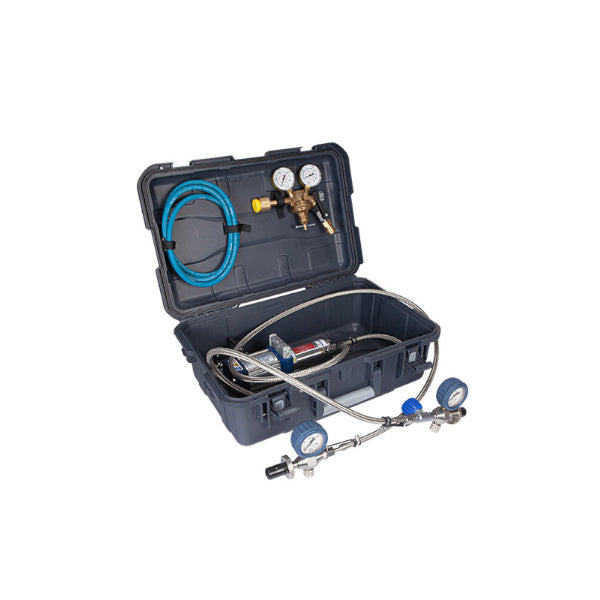
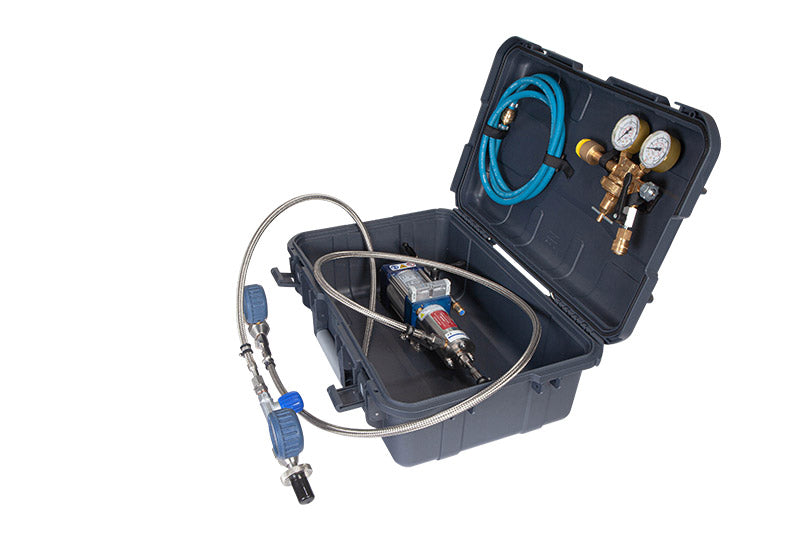
Partial pressure blending is the traditional method. You inject pure oxygen into an empty cylinder first, then top it off with compressed air to reach the target mix. During filling, an overflow hose is typically used for precise gas transfer and measurement while ensuring safe, accurate, and efficient operation in demanding applications.
Advantages:
-
Lower upfront equipment cost
-
Flexibility to create high-oxygen mixes for technical or decompression diving
Limitations:
-
Requires strict oxygen-handling procedures
-
Cylinders, valves, and equipment must be oxygen-clean
-
Higher fire and contamination risk
-
Slower fills, especially when demand increases
Partial pressure blending can work for small or low-volume operations, but it brings ongoing safety, logistics, and workflow challenges that require constant attention.
2. Continuous Blending

Continuous blending adds a controlled amount of oxygen to the intake air before it enters the compressor. The air and oxygen are mixed and compressed together, producing Nitrox continuously instead of blending each cylinder one by one.
Advantages:
-
Faster workflow than partial pressure blending
-
Continuous Nitrox production
-
Suitable for moderate-volume operations
Limitations:
-
Still requires handling pure oxygen
-
Compressors and downstream components must be oxygen-compatible
-
Higher safety and cleanliness requirements
-
Increased fire risk compared to membrane systems
A nitrox continuous blending system improves efficiency over partial pressure blending, enabling faster, more consistent Nitrox production while maintaining controlled and reliable oxygen enrichment.
3. Membrane Nitrox Systems

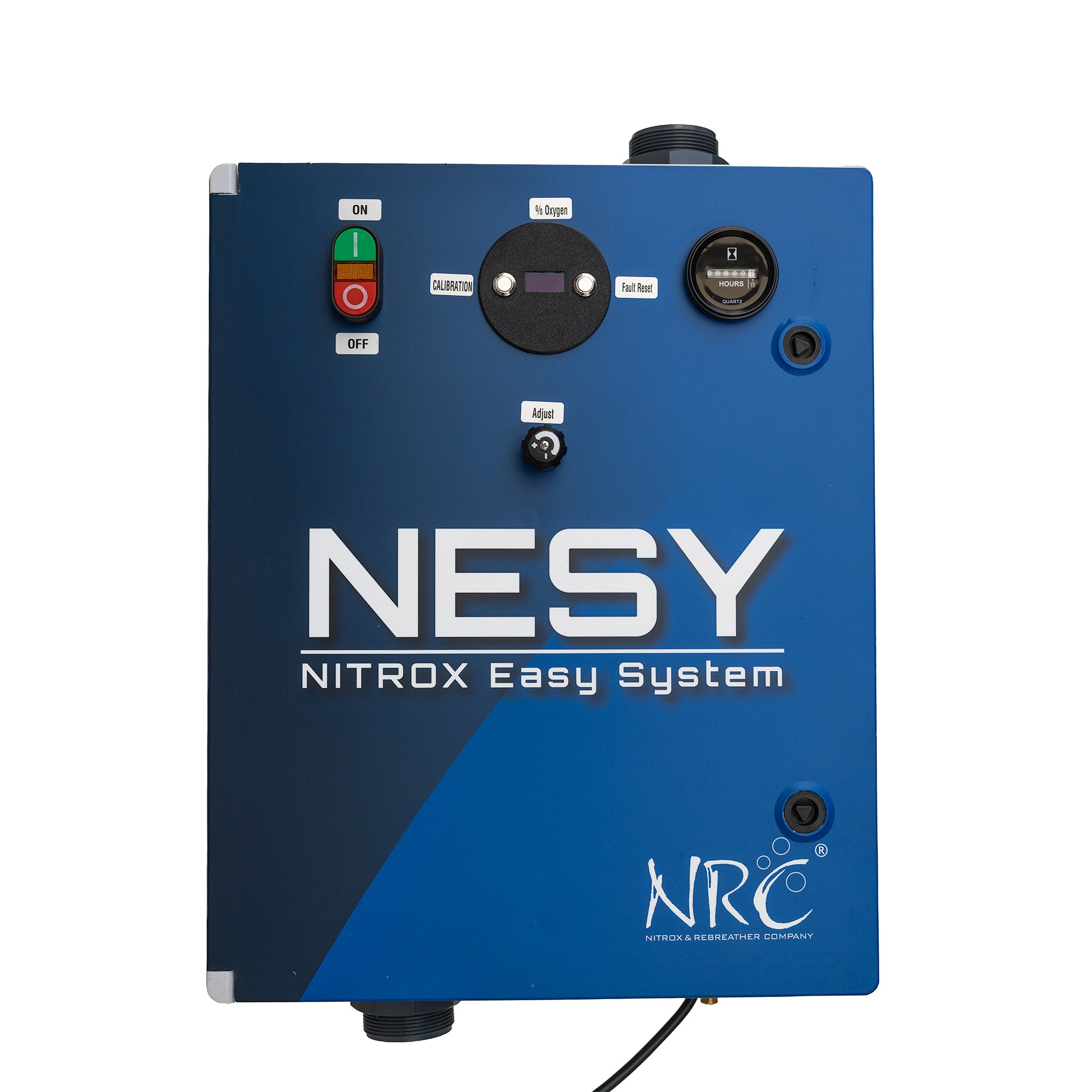
Nitrox membrane systems take a different approach. They filter nitrogen out of ambient air using semi-permeable membranes, producing a continuous flow of enriched air without ever handling pure oxygen.
Advantages:
-
No pure oxygen handling
-
Lower fire risk and simpler safety procedures
-
Stable, consistent Nitrox mixes
-
Continuous output that keeps filling
-
Designed for daily recreational diving
-
Lower operating costs over time
Because membrane systems simplify safety, speed up workflows, and scale easily with demand, they have become the global standard for professional dive centers focused on recreational Nitrox production.
Related Article: Nitrox Membrane System vs Partial Pressure Blending, Which One is For You?
4 Things to Evaluate When Choosing a Nitrox System
The right Nitrox system will be able to support your daily operations and stay reliable under pressure. These criteria help you evaluate systems based on how they perform in the real world, not just on paper.
1. Reliability and Durability
Your Nitrox system needs to work every day you dive. When it goes down during peak season, the impact is immediate. Boats wait, dives get cancelled, and customer trust takes a hit.
When comparing systems, look closely at:
-
Compressor and filtration build quality
-
Membrane lifespan and replacement cycles
-
Engineering standards and component sourcing
-
Resistance to heat, humidity, and saltwater environments
Well-built systems reduce unplanned downtime and protect your daily dive schedule.
2. Operational Efficiency
Efficiency defines how smoothly your team can deliver filled Nitrox cylinders without creating bottlenecks at the fill station. However, the right level of efficiency should always be evaluated in the context of your operation size, daily volume, and available budget.
Look for systems that provide:
-
Continuous Nitrox output
-
Automation with minimal operator input
-
Fill rates that match your daily tank volume
-
Stable oxygen percentages
-
Clear controls and easy monitoring
The more streamlined the workflow within your budget, the easier it becomes to scale operations and maintain profitability.
3. Safety and Compliance
Safety directly affects how easily your team can operate the system every day.
Nitrox systems designed for the recreational range, up to 40% oxygen, allow dive centers to use standard scuba cylinders and downstream equipment without oxygen-cleaning requirements, provided no pure oxygen is used.
When evaluating a system, look for:
-
Oxygen-compatible construction materials
-
Monitoring for pressure and temperature
-
Automatic shutdowns or interlocks that prevent unsafe operating conditions
A well-engineered system with stable mix control and clear operating procedures helps your team produce consistent Nitrox safely, while protecting both staff and divers.
4. Supplier Support and Long-Term Partnership
A Nitrox system is a long-term investment, and your supplier becomes part of your operational setup. When issues arise, fast support, available spare parts, and clear guidance matter just as much as the equipment itself.
When evaluating a supplier, look for:
-
Global availability of spare parts
-
Responsive technical support
-
Clear installation guidance and onboarding
-
Strong warranty coverage
-
A proven track record in after-sales service
At NRC International, we design and support Nitrox systems for long-term use, backed by more than 20 years of experience and installations in over 35 countries. Our systems support dive centers, liveaboards, and professional operations in a wide range of environments.
Explore NRC Nitrox Solutions for Your Dive Center
Choosing the right Nitrox system comes down to operational fit, long-term reliability, and the support behind it.
Whether you are installing Nitrox for the first time or replacing an existing system, the goal is the same: consistent fills, simple workflows, and dependable performance in real-world conditions.
At NRC International, we design Nitrox systems for professional dive operations of all sizes. From small dive centers to luxury liveaboards, our solutions are engineered for safety, efficiency, and long-term serviceability.
Explore NRC’s Nitrox systems and find the solution built to support your operation today and as you grow!
Frequently Asked Questions
What is the 40% rule for Nitrox?
In recreational diving, Nitrox mixes with 40% oxygen or less are commonly referred to as recreational Nitrox. Entry-level Nitrox certifications allow divers to use a single Nitrox mix within this range on no-decompression dives, primarily to extend no-decompression limits and reduce decompression stress.
From an operational perspective, this range is also significant. Nitrox mixes up to 40% oxygen can be handled using standard scuba cylinders, valves, and downstream equipment without mandatory oxygen-cleaning procedures, provided proper fill practices are followed and no pure oxygen is involved. This makes EAN32-40 practical for daily recreational diving operations.
Membrane Nitrox systems are designed to operate entirely within this recreational range, which is why they are widely used by dive centers focused on high-volume recreational diving rather than technical or decompression gas production.
How does a membrane system create Nitrox?
A membrane system produces Nitrox by passing compressed air through semi-permeable membranes that selectively remove nitrogen. By reducing the nitrogen content, the system delivers a stable, continuous flow of enriched air without ever handling pure oxygen. The resulting Nitrox is then compressed and filled into cylinders at the desired oxygen percentage.
This approach simplifies safety procedures and supports consistent, repeatable Nitrox production.
How deep can divers go with 32% Nitrox?
With a commonly used oxygen exposure limit of 1.4 bar PPO₂, the maximum operating depth (MOD) for EAN32 is approximately 34 msw (111 feet). Staying within this limit helps manage oxygen exposure while extending no-decompression time compared to air.
Remember that divers should always set their dive computers correctly and follow their training and dive plan.