What do you do when something goes wrong below the waterline, and you need to check it right away? A fouled propeller, strange noise, or dropped tool can quickly turn a good day on the water into a problem.
Compact onboard air systems let boat owners handle quick underwater checks and small fixes without waiting for outside help. They are practical tools, not emergency-only gear.
But not all compact air systems are built for the same job. Traditional mini scuba tanks are designed for emergency bailout, while Sail Air is made specifically for short maintenance tasks and onboard refilling.
What Sail Air Is Actually Used For

Sail Air is designed for short, practical underwater tasks that boat owners face all the time. It gives you enough air to safely inspect, fix, or retrieve something underwater without gearing up for a full dive or calling for help.
Typical uses include:
-
Checking the hull for damage, growth, or loose fittings
-
Clearing a fouled propeller, line, or anchor
-
Inspecting zincs, transducers, and running gear
-
Recovering tools or equipment dropped overboard
Because Sail Air is compact, easy to deploy, and refillable onboard, it fits naturally into everyday boat maintenance. It is a tool that helps you stay self-sufficient and solve small problems before they become expensive ones.
What Traditional Mini Scuba Tanks Are Used For
Traditional mini scuba tanks were originally designed as emergency bailout devices for divers, not as tools for routine boat maintenance. Their main purpose is to provide a very short air supply to reach the surface safely if the primary system fails.
In real-world boating scenarios, their use is limited. With only a few minutes of air, they are generally suitable for:
-
Very brief underwater checks
-
Emergency ascent support for trained divers
-
Short, shallow tasks where a full scuba set is unnecessary
Because mini scuba tanks require high-pressure refilling at a dive shop or compressor, they are not practical for repeated use onboard. Once the air is gone, the system is unusable until it can be refilled by a high-pressure source, which is most often found on land.
While scuba tanks are a recognized tool for maintenance, their limited duration and lack of easy onboard refilling mean they function more as a "one-shot" emergency backup than a self-sufficient tool for extended underwater work.
Comparing Sail Air And Traditional Mini Scuba Tank
Compact air systems may look similar at first glance, but they are built for very different purposes. Sail Air is designed specifically for boat maintenance and onboard use, while traditional mini scuba tanks are adapted from diver emergency equipment.
The table below compares both options based on what actually matters to boat owners.
|
Decision Factor |
Sail Air System |
Traditional Mini Scuba Tank |
|
Designed For |
Boat maintenance and short underwater tasks |
Emergency bailout for divers |
|
Typical Air Duration |
Up to 15-20 minutes (Sufficient for inspections and simple work) |
Short, emergency use |
|
Refill Options |
Manual hand pump, electric compressor, or scuba tank |
High-pressure source only |
|
Suitability for Boaters |
Purpose-built for self-sufficiency on the water |
A backup device that is difficult to reuse once empty at sea |
Why Self-Sufficiency Matters
When you are away from marinas or dive centers, the ability to refill your air system onboard becomes critical. If you do not have a high-pressure compressor or another way to fill a tank on board, traditional mini scuba tanks quickly become a limitation.
By contrast, Sail Air is designed to stay usable wherever your boat takes you. Its flexible refill options give you true independence on the water:
-
NRC Hand Pump for manual refills anywhere, no power required
-
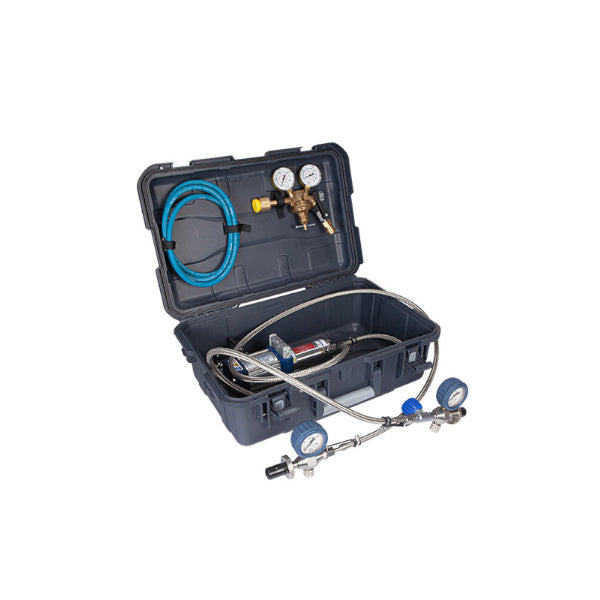
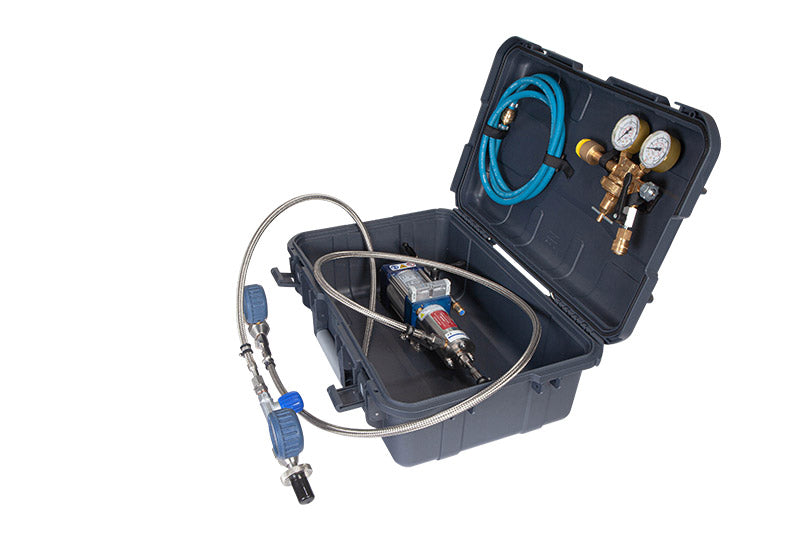
NRC Nano HP SailAir Compressor for fast, electric onboard refilling
-
Scuba tank transfer to quickly refill the Sail Air cylinder from a larger tank.
With these options, Sail Air is always ready when you need it. You are not tied to a shore-based compressor, and you are not limited to a single short use.
The Smarter Choice for Self-Sufficient Boaters
For real-world boating, the difference is clear. Sail Air is not an adapted dive product. It is a purpose-built system designed for short underwater work, onboard use, and repeated refilling without relying on shore-based facilities.
It delivers enough air for inspections and minor maintenance, stores easily on board, and is built with marine-grade materials to handle harsh environments. Most importantly, Sail Air keeps you independent. You can refill it yourself, use it again when needed, and stay in control when something needs attention below the waterline.
For boaters who want a complete and dependable solution, NRC offers ready-to-use packages such as the SailAir Set Basic and the SailAir Solo, combining the core system with the essential accessories for immediate onboard use.

Explore Sail Air and choose the setup that keeps you self-sufficient on the water!
Frequently Asked Questions
How much physical effort does the hand pump take?
The NRC hand pump provides a reliable, self-sufficient way to refill even in remote locations where power is unavailable. It does require physical effort, but it is manageable for most adults and does not require special training or exceptional strength. A full refill can be completed in a reasonable time, giving you a reliable way to refill your system even when no power or compressor is available.
Is Sail Air only for emergencies?
No. While Sail Air can be used as a safety backup, it is primarily designed for planned, short underwater tasks. Its air supply is optimized for inspections, clearing lines, and minor maintenance, not for full recreational dives. This makes it a practical working tool rather than an emergency-only device.
What kind of maintenance does the Sail Air system require?
Maintenance is straightforward and minimal. After use in salt water, the system should be rinsed with fresh water. Regular visual checks are recommended, just as with standard diving equipment. There is no complex servicing required for normal use.