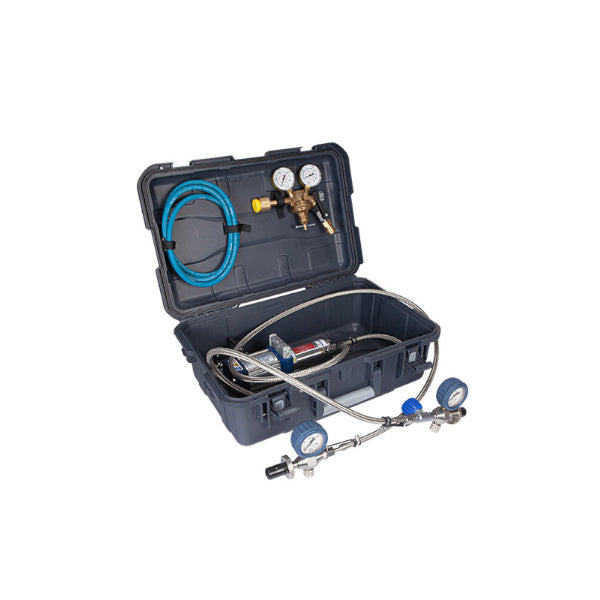
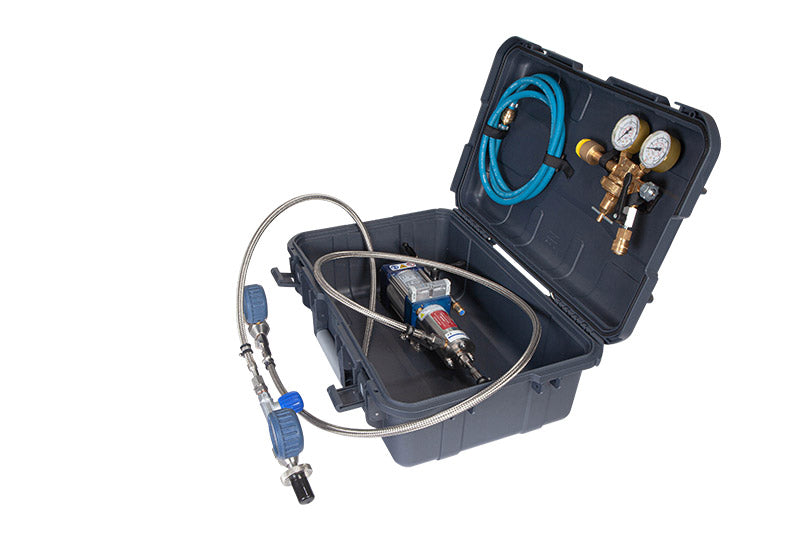
Is your gas booster taking longer to fill, struggling to reach target pressure, or behaving differently than usual? Small performance shifts are often the first indication that internal components are no longer operating within specification.
Before reduced throughput or blending inconsistency affects your operation, it is important to recognize some of these warning signs.
Below are seven indicators that suggest your gas booster should be scheduled for professional service.
Safety Notice: Gas boosters operate under high pressure and are often used in oxygen-compatible environments. Internal inspections or repairs should only be performed by trained personnel following the equipment’s operating manual.
1. Delivery Performance Decrease
A properly functioning booster should reach target discharge pressure within predictable timeframes. However, if you notice fill times increasing while inlet supply and drive conditions remain unchanged, performance may have shifted from its normal baseline.
In many cases, one possible cause is leakage. Escaping gas from the booster, piping, or hoses can reduce efficiency and extend fill cycles, so it is important to compare current fill duration with previously logged operating records and inspect the system carefully for leaks.
If escaping gas is detected, even in small quantities:
-
Close all cylinder shut-off valves completely and immediately.
-
Follow the shutdown procedure defined in the booster’s operating instructions.
-
Have the leakage inspected and repaired by a trained professional before resuming operation.
2. Booster No Longer Increases the Final Pressure
Gas boosters in blending environments are expected to deliver consistent and repeatable discharge pressure. However, if final cylinder pressure begins to vary between identical fills performed under the same parameters, something within the system has shifted.
In many cases, this inconsistency may indicate a problem with the check valves. When pressure cannot build or hold as expected, the function of the check valves should be inspected, and they should be replaced by a qualified professional if necessary.
3. Booster Audibly Loses Control Air
Under normal conditions, drive gas consumption follows a stable and predictable pattern. If you notice increased drive air usage or audible air loss without any change in pressure targets or transferred volume, the booster is operating outside its baseline.
This deviation may indicate a defect within the booster pump, associated equipment, or a defective seal ring. The seal ring should be inspected and replaced if necessary by a qualified technician. The pump assembly and related components should be inspected by a qualified professional before continued operation.
4. Booster Makes Short, Fast Stroke Movements
Under normal conditions, a gas booster operates with a steady and rhythmic stroke cadence. However, if the booster begins producing short, rapid strokes or erratic, uneven cycling, the system is no longer operating within its normal pattern.
This behavior may indicate a problem with the control valve. The control valve should be inspected and replaced if necessary. If you are not qualified to perform this inspection, the booster should be brought to the manufacturer or an authorized service provider for professional servicing.
5. Booster Does Not Switch Stroke Direction
During normal operation, a gas booster regularly reverses its stroke as pressure builds. If the booster stops switching direction or appears stuck in one movement cycle, the system is no longer functioning as intended.
This issue may be related to the control valve, the 5/2-way valve, or the servo tappet. These components should be checked to ensure they are operating correctly.
Like any internal inspection, this should only be performed by trained personnel. If you are not qualified to carry out these checks according to the operating manual, it is best to leave the system untouched and have it inspected by the manufacturer or a qualified service technician.
6. Visible Contamination
Gas boosters used in oxygen-compatible environments require strict cleanliness standards. Oil, grease, sand, dirt, dust, or other particles must never be allowed to reach the booster or its high-pressure components.
If moisture, residue, or particulate contamination is visible around the booster, the system is no longer operating under proper environmental conditions. In this case, the booster should be taken out of operation and the contamination removed using appropriate oxygen-compatible cleaning procedures.
If you are unsure how to remove the contamination safely or if the booster no longer operates correctly afterward, the unit should be taken to a qualified service center for professional inspection and servicing.
7. Manufacturer Service Interval Reached
Even if your booster appears to run normally, scheduled service intervals should not be ignored. Preventive maintenance helps maintain pressure stability, seal integrity, and overall reliability during gas blending operations.
For this reason, it is important to keep track of operating hours and maintenance history. When the recommended service intervals are reached, the booster should be inspected and serviced to avoid performance issues or unexpected downtime.
For NRC TEC Boosters, we recommend the following maintenance schedule:
-
Monthly: Tighten connections if necessary and visually check the overall condition of the booster system
-
Annually: Perform a scheduled inspection and service of the booster
-
Every 3 years: Carry out a comprehensive service and internal overhaul
Monthly checks can be handled by a trained operator on-site. Annual servicing and the three-year overhaul, however, require a qualified and certified technician. If you do not have trained personnel available, the booster can be serviced by NRC or another authorized service provider.
Need Professional Service for Your NRC TEC Booster?
If your booster shows any of the signs described above, scheduling service early helps prevent performance loss and operational disruption. Addressing small deviations before they develop into larger mechanical issues helps maintain stable blending workflows and reliable gas delivery.
With more than two decades of experience in high-pressure Nitrox and technical gas systems, NRC designs and services TEC Boosters used by professional dive centers and liveaboards worldwide. Our service team understands the operational demands placed on booster systems and ensures that pressure stability, sealing integrity, and oxygen-compatible performance remain within specification.
If your NRC TEC Booster requires inspection, maintenance, or scheduled servicing, contact us to coordinate professional support and keep your gas system operating at peak reliability!